

Please… There are many benefits to the metric system (aka International System of Units) and a long glorious history of imperial units but I personally think the time has come to standardize on one system across the board. Currently many industries in the US use metric as their only unit of measure but construction seems to be a hold out. Imagine the simplification of material manufacturing and sourcing not to mention that it is easier to go by tens in metric than decimal results in imperial or conversions that can cost serious construction issues due to rounding.
Am I alone here?
We the United States are the largest hold out on adoption as a sole units measurement system.
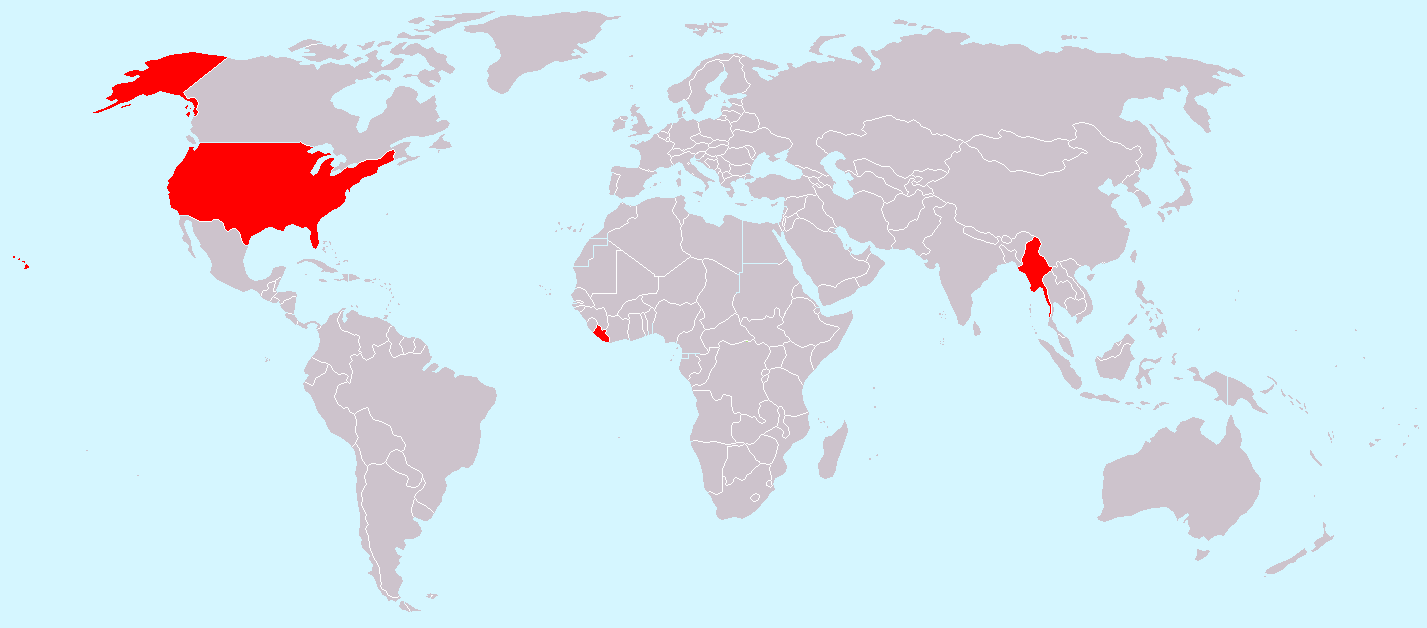
While I am at it can we get retire the dewey decimal system?
FYI: Excellent & Free online calculators eCalc

Cheers,
Shaan


New Zealand started to change in 1970 and I’m so glad it did. As was only 4 I don’t remember it but still remember little km/h stickers they issued to put on the MPH car speedo.
One thing I’d like to see when/if the US adopts metric is that you spell & say it properly. I have “The New Zealand Metric Manual 1972” which clearly states;
“Metre: The American spelling “Meter” is not acceptable”
“Kilometre should be pronounced “Kill-o-metre” not “Keel-o-metre”
🙂
It’s been 15 years since I’ve been to the US (I’m one of those Down Under) and I recall travelling in a US built car (Automobile for you guys) that had the ability to display the mileage in both Imperial and Metric even then.
Down here, when we did the conversion it was a simple case of on this date we ARE Metric – you CANNOT even sell an Imperial (or mixed format) Tape measure or Ruler. This was so strictly enforced that the company I worked for had to obtain special permission to import Imperial tapes (as the Parent company was US and many drawings came from them). Things have changed today (we can get mixed format Tapes and Rulers), but we’re a dedicated Metric Country now!
As for the Construction side of things, the problem is understandable as unfortunately particularly the existing Plumbing connections are all Imperial – so, We need to have Imperial connections available. Do you have all new installations in Metric, those connecting to existing in Imperial (I think you’ll get the drift).
So, down here it’s a case of Plumbing is all still Imperial and we just refer to it in Metric terms. Interesting side of it is the way we refer to it – depending on the school you went to, 3/4″ is either 19 or 20mm, 2″ is either 50 or 52mm (but for some reason, 1″ is always 25mm – go figure).
Hey, we got it sorted and understand these differences and nobody died from the conversion. By the way, we oldies still like to whip out the odd “6 foot tall” comment every now and then to confuse the Kids 🙂
On your comments about the metric system I have a few Questions.
I’d Love to know why I should be punished in this way? Why should I be forced to use another countries Hair Brained system? Why should I Be FORCED to replace tens of thousands of dollars of tools it took me a life time to amass? I’ve spent my life leaning to see estimate in inches not Micky – Meters, why should I be forced to learn a new system? didn’t we Americans Beat the Metric system in WWII? Wasn’t it American Industry with it’s well developed Imperial system that came to the rescue? but seriously why should we Americans have to Aqueous to the whims of the EU and Asia at the very cost of the American Worker. I know in the shop I work in, if we were forced to convert to Metric, we would have to replace every single machine we own from the lathes and mills up to our waterjet, and we COULD NOT find replacements for any of it. all this globalization is wonderful for the rest of the world as it works against American Industry! what’s next will my Drafting software only have metric line weights so as to obsolete every pen I spent huge $$$$ to buy for my plotter? wait yes, yes it did!
When I have started to work, one of my firs job was to drawing the pumps NPSH graphics, based on the tests results, and draw them in AutoCAD 14 (the graphics it is not linear)
Is it possible that for understand how mutch water are can be pushed there are 3 units !
– Liter / Second
– Imperial gallon / minute
– U.S. Gallon / minute
🙁
(Sorry form my horrible english, it is not my mother tongue)
Sure it might be easier to count in base 10, but the imperial system is based on the human body, which (in my opinion) makes it easier to estimate and comprehend distances. This is especially important in the architectural and construction industries where things are built for human habitation. Centimeters and millimeters are so small that they are only useful when measuring very small things.
However, we already by soft drink by the liter so we can all understand that unit of measurement. I don’t think switching over “cold-turkey” is the right answer.
And I say it “Kill-om-eter”
No! No! No! it;s KIL-LOM-ETER!
2″ is 50.8mm that’s 51mm not 52mm!
I work in “Architectural Metals & Glass”
I live in Canada & we’re metric, but:
Half of our business is in the US; Imperial!
All OLD Buildings are Imperial!
All Structural Steel is Imperial!
Screws,Bolts,Nuts,Washers are Imperial!
Wood,Plywood,Chipboard,Drywall is Imperial!
AutoCAD has “Dual Dimensioning”
I work with both IMPERIAL & METRIC, no pain!
My two sons 23 & 25, both born after “Metric Conversion”, will tell you they are six foot tall and weigh 180 pounds!
Best regards, Stephen
Years ago the United States was supposed to go metric. We were all execited. Coca Cola now came in 2 liter bottles. Alas nothing else followed suit.
I am opposed to going metric. First, the U.S. was built in feet inches and miles. I used to live in the San Fernando Valley, where Victory Blvd, and Sherman Way are 5280 feet centerline to centerline.
I was a machinist, learning to convert measurements in the form (x+s*(1/2^n)”) i.e. 1 1/2, 2 13/32 etc. (1.5, 2.40625)
You did an article some months ago called fun with numbers. Here is some more.
1/2=.5
1/4=.25
1/8=.125
1/16=.0625
1/32=.03125
1/64=.015625
5/2=2.5
5/4=1.25
5/8=.625
5/16=.3125
5/32=.15625
I never conciously tried to memorize any of that (and the example above is only the tip of the iceberg). I still use this skill in CAD drafting. It gives us checksums for checking precision. I do not round when entering distances (Thats a job for dimensions) I set my global units to engineering with maximum precesion, and if I trim a .875 long line at the mid point, the result should come out .4375. If i get .43694576, then I know I missed.
This does not work in metric.
This has been a great discussion. My main concern and reason for metric support is when I was in the construction industry we built things for the transportation, navuigation, military, and petrochecmical amd they were using mixed metric resulting extra cost to materials due to it being hard to purchase metric bolts in the U.S. as well as steel rolled in metric thickness, metric flanges and piping, as well as fabricators rounding (they will no matter what) resulting in installation problems in the field. So we in the US now have mandatory metric in some industries by law but not others which results in errors and extra costs. Having one system solves it for the most part. Either the U.S. pays more for materials and errors inconversions or we adopt the international units system.
Cheers,
Shaan
Actually, the US recognized the Metric system way back in 1855. We went full ISO in 1976 (Canada followed in 1978). Nobody forced, or enforced a changeover. Nails are bent in either format. Machinists convert. Those who draft and document follow the company standards. Companies which remain Imperial only are severely limited in the international marketplace. Until fractional dimensions are found only in antique shops, those who are successful will remain dimensionally bilingual.
My friend Shaan, let me help you on this as a great fan of this battle.
Why Metric? Because it’s all decimal!
All you have to do is to understand the system, and it is ages easier than the Imperial one.
Let’s see:
1 km = 1,000 m
1 m = 10 dm (decimeters) = 100 cm (centemeter) = 1,000 mm
Oh well, everybody knows that, you’ll say, but let’s go further:
1 dm3 = 1 liter(litre) aha! Now we started putting things together… let’s add some water on this: 1 dm3 = 1 liter of water = 1 kilogram at the sea level and, this same water will freeze at 0 degrees celsius and boil at 100 degrees.
Too many numbers?
No, just tens.
If you’d like to understand this a little better, e-mail me. 🙂
Herbert.
I personally have no objection to the metric system. What I object to is the argument that it is intrinsicly easier to use or learn than than an other weights and measure system. Yes base ten is easier to work with than base eight or sixteen or eleven, but how often do you use base ten in measurements vs other bases. Most of the time you want 1/3rd or 1/4th or 1/8th or 1/32nd of something. Do you need 1/10th or 1/100th of something more often than any other ratio. What is 1/3th or 1/6th of a meter?; being base ten does not help here.
Look at your monetary system. Most of the world has a base 100 monetary system. Yet their incremental money is in halfs or quarters, not just tenths.
If your native language is not Latin based, milli, kilo, cent, means nothing to you. To a Chinese speaker, until it is taught to him, milli does not equate to 1000, nor does cent equate to 100. SO until you learn the relationship you would not intuitively know that one centimetre equals 1/100th of a meter. Just as you do not know that one inch equals 1/36th of a yard until you learn that relationship. Oh, but once you learn those relationships, the metric system is easier to work with, nonsense. Again, what is 1/6th of a meter? 166.6667 mm. How did you arrive at that, by dividing 1000 mm by 6. Well how do arrive at 1/6th of a yard, by dividing 36 inches by 6 to equal 6 inches. Wow! how did that happen. A yard is evenly divisable by 3, 6, or 12 but not by 10 whereas the meter is evenly divisable by 10 (or 100) but not 3,6 or 12.
Yes, we frequently adjust measurements by percentages and in the metric system that works will as long as you are using whole units. Increasing 1 meter by 8% is fairly easy, 1080 mm, but now increase that amount by 3%, you end up with 1112.4 mm. How is that any different than using inches or feet or yards; an 8% increase in one yard ( 36 inches) is 38.88 inches and by an additional 3% is 40.046 inches. The point is you have to deal with fractional amounts in both systems.
That is not to say that the US should not fully adopt metric measurements in industry in order to make their goods more marketable in foreign markets. However, since the USA does not expect the rest of the world to abandon their native language and speak English (well, perhaps some in the US do), then why shoud the rest of the work expect the USA to give up their traditional weights and measures system to match theirs?
Thank you all, very much, for your comments on U.S. metrication.
In reading these posts, I understand, all the more clearly, that the American people object to metrication primarily because it appears to be both costly and mandatory. Please permit me to clarify. First, yes, there are one-time costs inherent in the process of changing a country’s system of measurement—changes in signage, tools, documents, etc. But the act of changing over to metric is a one-time affair. One does not metricate repeatedly. Second, changing a measurement system comes only with ASSENT. It is in the nature of measurement to make the widest possible consultation among all sectors of a society before the actual process begins. What appears to be the force of government is really the force of a people making a societal change. We are talking about measurement, a fundamental activity of a nation. The change is done centrally, but such a change in the U.S. is part of a constitutional authority granted to Congress by the American people (Article I, Section 8). It must never be allowed to be oppressive. It must be planned and smoothed, i.e., the path cleared, before the starting gun is fired and the race to metrication is begun. It is a massive and sweeping undertaking, but, for the United States, it is long overdue, and now is the time for us to do it.
Paul Trusten, R.Ph., Public Relations Director, U.S. Metric Association,
Thank you so very much for your comments on this subject of metrification. There are many sides to the change and people or signs are the least the most is the metric materials available in large quantity and competitive price for construction. Hopefully the industries and education can move forward and start accelerating the process in my personal opinion. Metric is the future, just a long time coming and seems as though it is stalled except in some industries such as chemical and medical. I had thought there was federal funding laws designed to increase adoption but I could be mistaken.
Best wishes in your uphill efforts,
Shaan